


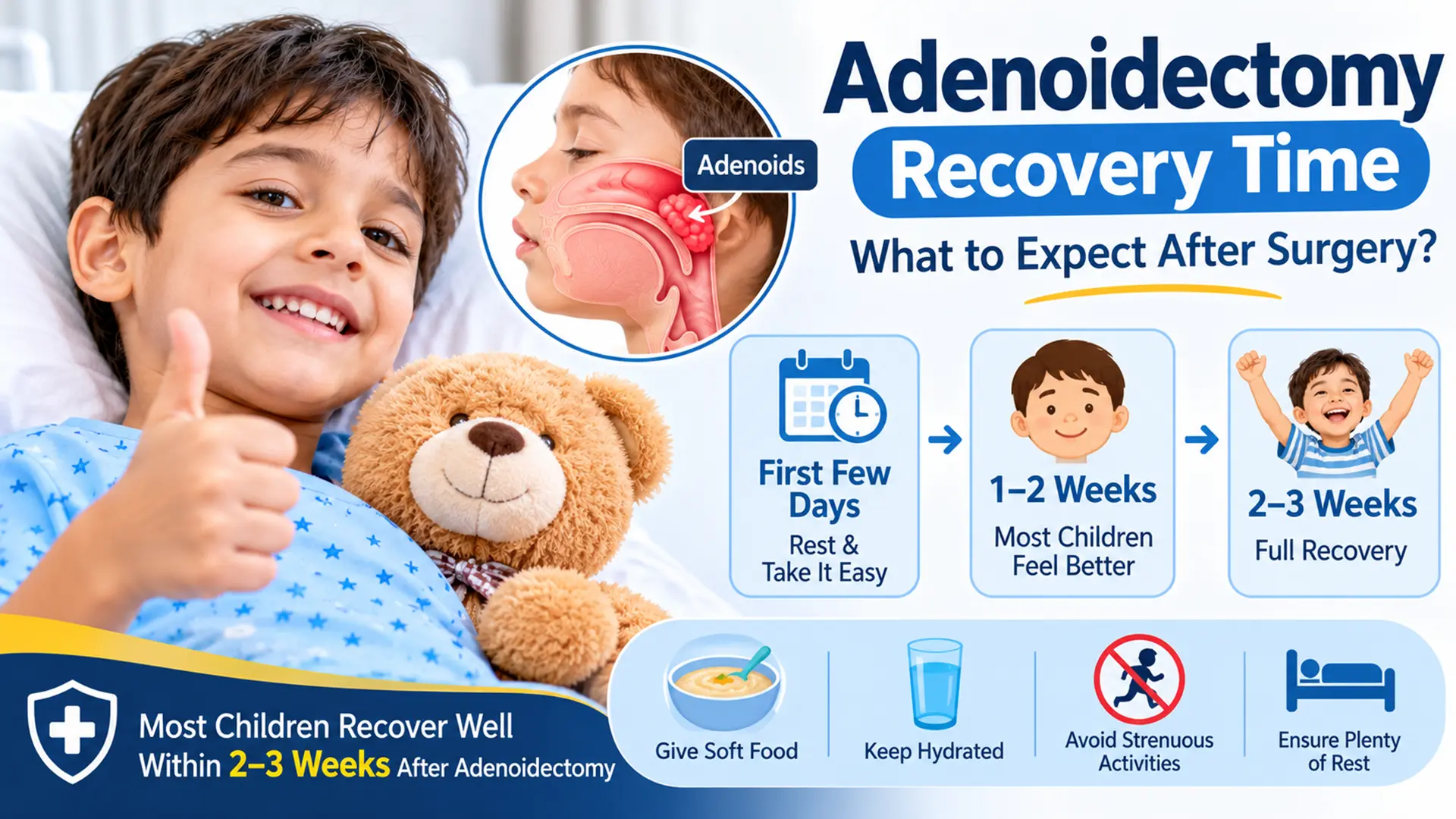
Adenoidectomy Recovery Time: A Day-by-Day Guide for Parents
Adenoidectomy recovery time is usually about one to two weeks. Most children go home the same day, rest for a few days and return to school after about a week, although some hospitals advise longer. Expect a sore throat, earache and bad breath for a few days, and a snuffly nose and snoring for a few weeks while the swelling settles. Bleeding is uncommon but needs urgent medical attention. Always follow your own surgeon’s instructions, which can differ from the general guidance below.
What Happens Right After Surgery
After the operation your child is taken to a recovery area while the anesthesia wears off. Most children wake within one to two hours. Their mood can be unpredictable: crying or agitation is usually confusion from the anesthesia rather than pain, and most children do not remember it.
Most children go home the same day, and some stay one night. Before discharge, the team usually wants your child to be comfortable and alert and to have had something to eat and drink. Nausea is common at first and settles. Adenoid surgery is generally done as a day case for children who are fit and well, with no bleeding or bruising disorder.
Adenoidectomy Recovery Timeline
Advice differs between hospitals, so treat this table as a guide and follow your surgeon’s written instructions.
| Period | What is usually normal | What to do |
| Day of surgery | Sleepiness, nausea, sore throat, mild earache | Rest quietly, offer sips of fluid, give pain relief as directed |
| Days 1 to 3 | Sore throat, earache, bad breath, tiredness | Quiet indoor play; keep away from crowds and anyone with a cold |
| Days 4 to 7 | More energy; blocked, snuffly nose; a little blood-stained nasal discharge; mild fever for a few days | No nose blowing; gentle wiping only; many children return to school at about a week |
| Week 2 | Swelling settling; some snoring or stuffiness; smelly nose | Gentle nose blowing is usually allowed after about 10 days; stay alert to late bleeding |
| Weeks 3 to 4 | Snoring and nasal sound improving | Normal activity; ask your surgeon before flying, as some hospitals advise waiting about 3 weeks |
Pain, Earache and Fever
A sore throat is the main pain. It is usually worst for the first several days and can occasionally last up to a week. Earache and bad breath are common for a few days and are part of normal healing. A low-grade fever, up to about 38.3 °C (101 °F), and bad breath may persist for several days.
- Give paracetamol or ibuprofen exactly as directed on the packaging and by your surgeon
- Never give aspirin to a child under 16
- Your surgical team may ask you to stop aspirin or ibuprofen before surgery, so follow their instructions
- Call the hospital if the fever is higher, lasts beyond a few days, or your child seems to be getting worse rather than better
What to Eat and Drink After Adenoid Surgery
Unlike tonsil surgery, most children can eat and drink as normal after adenoidectomy. In practice, many children prefer cool, soft foods for the first day or two.
- Good choices: water, diluted juice, curd, ice cream, soup that has cooled, porridge, mashed fruit and vegetables
- Avoid for the first few days: very hot, spicy, hard or crunchy foods that can irritate a sore throat
- Keep drinking. A child who drinks well recovers more comfortably. Call the hospital if your child refuses all fluids
Nose Care, Bad Breath and Voice Changes
- No nose blowing for the first week, then only gently for about another few days. Blowing early can start bleeding
- Blood-stained discharge can occur. Wipe the nose gently
- A smelly nose can last a couple of weeks and settles as the area heals
- Snoring and a snuffly voice can continue for several weeks until swelling settles
- A nasal-sounding voice or food and drink coming into the nose happens in a small number of children. It usually settles within a few weeks to a couple of months. If it does not, tell your surgeon, because speech therapy or further assessment can help
Activity, School and Travel
- Rest for a few days. Quiet indoor play is fine once your child feels up to it
- Avoid crowded places such as parties and cinemas for several days to reduce the risk of infection
- School: many hospitals advise a week off, while some suggest longer. Your surgeon will tell you what applies to your child
- Travel: some hospitals advise avoiding flying or foreign travel for about three weeks
- Air quality: while the nose heals, avoid dusty and smoky places. On days when air quality is poor, resting indoors is a sensible precaution
Normal or Not Normal? When to Call Urgently
| Usually normal | Call the hospital or surgeon the same day |
| Earache and bad breath for a few days | Fresh, bright red bleeding from the nose or mouth, which can happen up to about 2 weeks after surgery |
| A little old, blood-stained mucus from the nose | A nosebleed that will not stop (go to the emergency department) |
| Snoring and a snuffly nose for a few weeks | Vomiting blood or dark blood |
| Low-grade fever for a few days | High or lasting fever, or a child who is getting worse |
| Tiredness in the first days | Refusing to drink, or signs of dehydration |
| Mild nasal-sounding voice that is improving | Difficulty breathing, unusual drowsiness, or a stiff, tilted neck with pain |
Find out before surgery which emergency department you should use and who to call at night.
Why Recovery Differs Between Children
Recovery varies with your child’s age, general health, the surgical technique and whether other procedures are done at the same time. If the adenoids are removed together with the tonsils or with ear tubes, expect a longer recovery. Our tonsillectomy recovery time guide explains the timeline for tonsil surgery.
Honest pros and cons of adenoidectomy recovery
- In its favor: it is usually a day-case operation and most children have an uneventful recovery within one to two weeks
- To plan for: a week or more off school, a few uncomfortable days, a snuffly nose for weeks, and a small risk of bleeding. A national English survey cited by ENT UK found bleeding in about 1 in 200 operations, and another hospital leaflet quotes fewer than 1 in 100 children needing emergency treatment for bleeding
Before Surgery: Is It Really Needed?
Many children with enlarged adenoids improve without an operation. If you are still deciding, read our guide to enlarged adenoids in children, which explains watchful waiting and nasal sprays.
Planning Adenoid Surgery in Delhi
If your child needs surgery, Dr. Varun Rai, an ENT surgeon at Sir Ganga Ram Hospital, can explain the process, risks and aftercare in advance. Learn more about adenoidectomy treatment in Delhi or book an adenoidectomy consultation in Delhi to ask about the recovery plan for your child.
Address: Department of ENT and Head & Neck Surgery, Room No. F-77, First Floor, OPD Block (Old Building), Sir Ganga Ram Hospital
Phone: +91 7042501444 | Make an appointment
Medical disclaimer: This article is for general information and does not replace advice from a qualified doctor. Recovery varies from child to child, so follow the instructions you receive from your own surgeon.
3. FAQs
How long does it take to recover from adenoidectomy?
Most children recover within about one to two weeks. They usually go home the same day, rest for a few days and feel much better within the first week. A snuffly nose and snoring can last several weeks while the swelling settles.
When can my child go back to school after adenoidectomy?
Many hospitals advise about a week off school, and some suggest longer to reduce the risk of picking up an infection. Your surgeon will give advice based on your child’s age, health and how they are healing.
How painful is recovery after adenoidectomy?
The main discomfort is a sore throat and earache, which are usually worst in the first several days. Regular pain relief given as directed by your surgeon, such as paracetamol or ibuprofen, is usually enough. Never give aspirin to a child under 16.
What can my child eat after adenoid surgery?
Most children can eat and drink as normal, though cool, soft foods are often more comfortable for the first day or two. Avoid very hot, spicy, hard or crunchy foods for a few days and keep your child drinking well.
Is bleeding normal after adenoidectomy?
A small amount of old, blood-stained mucus from the nose can happen, but fresh, bright red bleeding from the nose or mouth is not normal and needs urgent medical attention. It can occur up to about two weeks after surgery. Contact your surgeon or go to the nearest emergency department straight away.
Why does my child have bad breath and earache after adenoid surgery?
Bad breath and earache are common for a few days after adenoidectomy and are part of the healing process. If the pain is severe, gets worse, or comes with a high fever, contact your surgeon.
Will my child still snore after adenoidectomy?
Some snoring and a snuffly nose are common for a few weeks while the swelling settles. Snoring should improve as the area heals. If loud snoring or breathing pauses continue, tell your surgeon.
Why does my child sound nasal after adenoid surgery?
A small number of children have a nasal-sounding voice or find that food and drink come into the nose after surgery. It usually settles within a few weeks to a couple of months. If it does not, tell your surgeon, because speech therapy or further assessment can help.
When can my child fly or travel after adenoidectomy?
Some hospitals advise avoiding flying and foreign travel for about three weeks after the operation. Policies differ, so ask your surgeon before booking travel.
When should I call the doctor after adenoidectomy?
Call straight away for fresh bleeding from the nose or mouth, vomiting blood, a high or lasting fever, refusal to drink, difficulty breathing, unusual drowsiness, or a child who seems to be getting worse instead of better. Do not wait for the next appointment.
References
- UK NHS hospital discharge leaflets for adenoidectomy: University Hospitals Coventry and Warwickshire, Adenoidectomy: Parent/Carer Discharge Information (eat and drink as normal; avoid crowded places; no nose blowing for the first week, then gentle blowing; earache, bad breath and snoring common); United Lincolnshire Hospitals, Adenoidectomy Discharge Advice (return to school about a week after); Royal Berkshire NHS Foundation Trust, Adenoidectomy, 2024 (fewer than 1 in 100 need emergency bleeding treatment; avoid flying about 3 weeks); NHS Lothian, Day Case Adenoidectomy: After the Operation (nosebleed that will not stop needs emergency care); University Hospitals Sussex, Adenoidectomy, 2020 (call within the first 7 days for fever, lethargy or fresh bleeding).
- ENT UK. About Adenoid Surgery (patient information leaflet). Used for: day-case surgery, bleeding in about 1 in 200 operations in an English survey, nasal-sounding voice that usually settles, nausea after surgery.
- Hunter New England Kids Health and Sydney Children’s Hospitals Network. Adenoidectomy (patient information). Used for: blood-stained nasal discharge, smelly nose for a couple of weeks, bleeding up to 2 weeks after surgery.
- Nuffield Health. Adenoidectomy (patient information). Used for: recovery in about a week to two weeks, at least a week off school, paracetamol or ibuprofen, never aspirin under 16, voice change settling in a few weeks.
- Rosenfeld RM. What to Expect After Adenoidectomy (patient information sheet, 2019). Used for: fever up to 101 °F and bad breath for several days, swelling for 1 to 2 weeks, mood in the recovery room.
- Department of Otolaryngology, Washington University in St. Louis. Post-operative care instructions following adenoidectomy. Used for: sore throat for several days, avoiding hot, spicy and crunchy foods.
- Lambert EM, You P, et al. Adenoidectomy and persistent velopharyngeal insufficiency: considerations, risk factors, and treatment. International Journal of Pediatric Otorhinolaryngology. 2021;149:110846. Used for: velopharyngeal insufficiency as a rare complication.

