


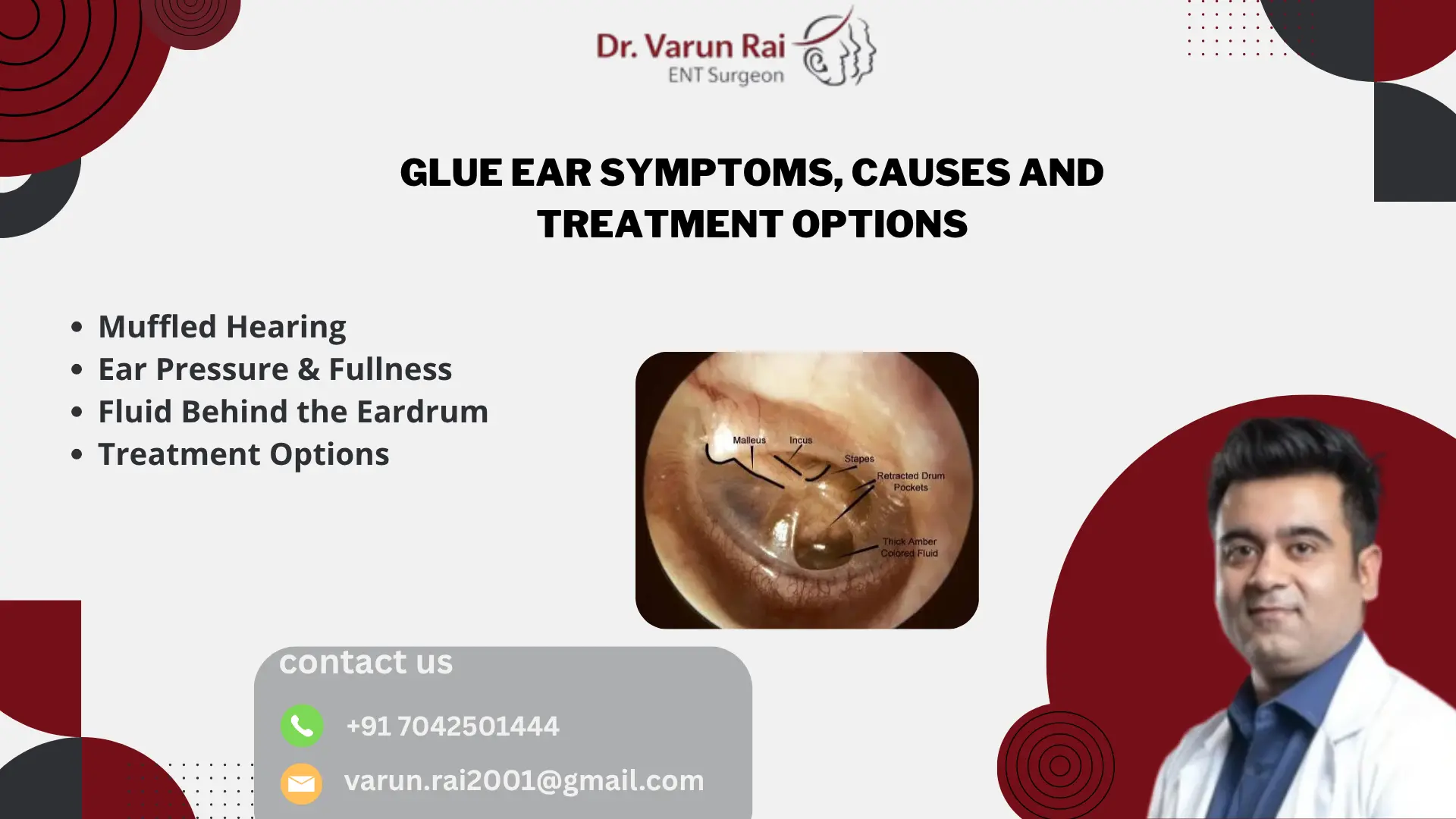
Glue ear is a common ear condition in which thick fluid accumulates in the middle ear behind the eardrum. This fluid can affect hearing, cause a feeling of fullness in the ear, and sometimes contribute to speech or language difficulties in children. Although glue ear often improves naturally, persistent fluid and hearing problems may require assessment by an ENT specialist.
Understanding Glue Ear Symptoms, Causes and Treatment Options can help patients and parents recognise the condition early and make informed decisions about appropriate care. The condition is particularly common in children, but adults can also develop glue ear following respiratory infections, allergies, or problems affecting the Eustachian tube.
If you are looking for an ENT specialist in Delhi, Dr. Varun Rai, ENT Surgeon, specialises in sinus surgery and sialendoscopy. An ENT consultation can help determine the cause of hearing difficulties and whether further investigation or treatment is necessary.
Understanding Glue Ear Symptoms, Causes and Treatment Options
Glue ear, medically known as otitis media with effusion (OME), occurs when fluid collects in the middle ear without the typical signs of an acute ear infection. The middle ear is the space behind the eardrum that contains the small bones responsible for transmitting sound.
The Eustachian tube connects the middle ear to the back of the nose and helps regulate air pressure and drain secretions. When this tube does not function properly, fluid can accumulate behind the eardrum. The fluid may become thick and sticky, which explains the term glue ear.
What are Glue Ear Symptoms, Causes and Treatment Options? Symptoms commonly include muffled hearing, difficulty understanding speech, and a sensation of pressure inside the ear. Treatment depends on the duration of the condition, the degree of hearing loss, the patient’s age, and whether the fluid affects daily activities or development.
In many cases, glue ear resolves without surgery. However, persistent hearing difficulties should be evaluated by an ENT specialist.
Common Symptoms of Glue Ear
Glue ear does not always cause pain, which means the condition may go unnoticed, especially in young children.
Common symptoms include:
- Muffled hearing: Sounds may seem quieter or less clear than usual.
- Difficulty understanding speech: Children may struggle to follow conversations, particularly in noisy environments.
- Frequently asking for repetition: A child may repeatedly ask others to speak louder or repeat sentences.
- Increased television volume: Some children turn up the television or other devices to hear better.
- Ear fullness or pressure: The affected ear may feel blocked.
- Speech and language difficulties: Persistent hearing problems during early childhood may affect speech development.
- Reduced attention: Difficulty hearing instructions may sometimes appear to be a concentration or learning problem.
- Balance concerns: Some children experience balance difficulties, although these are not present in every case.
Sudden hearing loss, severe ear pain, high fever, or discharge from the ear requires prompt medical assessment because these symptoms may indicate another condition.
What Causes Glue Ear?
Glue ear usually develops when the Eustachian tube cannot ventilate the middle ear effectively.
Possible contributing factors include:
- Upper respiratory infections: Colds and other respiratory infections can cause inflammation around the Eustachian tube.
- Enlarged adenoids: Enlarged adenoids may interfere with normal Eustachian tube function in children.
- Allergies: Allergic inflammation in the nose may contribute to congestion and impaired middle ear ventilation.
- Eustachian tube dysfunction: Poor pressure regulation can allow fluid to accumulate behind the eardrum.
- Anatomical differences: Some children have structural or developmental factors that increase their risk.
- Exposure to tobacco smoke: Second-hand smoke is associated with an increased risk of middle ear problems.
- Repeated ear infections: Previous infections may be associated with persistent fluid in the middle ear.
Glue ear is not necessarily caused by an active bacterial infection. Therefore, antibiotics are not routinely appropriate for uncomplicated glue ear.
Who Is at Greater Risk?
Children between approximately two and five years of age are particularly susceptible because their Eustachian tubes are shorter and function differently from those of adults.
Children who attend childcare settings, experience frequent colds, or have enlarged adenoids may be more likely to develop the condition. Adults can also experience middle ear fluid, particularly after a respiratory infection.
Persistent or one-sided middle ear fluid in an adult requires appropriate ENT evaluation, especially when there is no clear explanation. The specialist may need to examine the nose and nasopharynx to identify an underlying cause.
Diagnosis of Glue Ear: Symptoms, Causes and Treatment Options
Accurate diagnosis is essential because muffled hearing can result from several conditions, including earwax blockage, acute middle ear infection, eardrum problems, and other causes of hearing loss.
An ENT specialist evaluates the symptoms, examines the ears, and recommends appropriate hearing tests when needed. The aim is to confirm whether fluid is present, assess its effect on hearing, and identify any underlying problem.
Clinical Examination
The doctor begins by asking about hearing difficulties, recent infections, ear discomfort, speech development, and the duration of symptoms.
An otoscope is used to inspect the ear canal and eardrum. The examination may reveal an opaque or retracted eardrum, fluid behind the eardrum, or reduced movement of the eardrum.
The findings help distinguish glue ear from an acute ear infection, which commonly involves additional signs of inflammation and may cause pain or fever.
Hearing Tests
A hearing assessment helps establish whether the fluid is affecting the patient’s ability to hear.
Common investigations include:
- Pure-tone audiometry: Measures hearing sensitivity at different sound frequencies.
- Tympanometry: Evaluates eardrum movement and middle ear pressure. A flat tympanogram may support the presence of middle ear fluid.
- Age-appropriate hearing assessment: Special techniques can be used for infants and young children who cannot complete conventional hearing tests.
These tests are particularly important when fluid persists, hearing difficulties interfere with daily activities, or speech and language development is a concern.
When Should You Consult an ENT Specialist?
Arrange an ENT consultation if hearing difficulties persist, a child frequently asks for repetition, speech development appears delayed, or symptoms interfere with school, work, or communication.
Children with persistent glue ear are often reassessed after a period of observation, commonly around three months when there are no significant risk factors requiring earlier intervention. The appropriate follow-up interval depends on the patient’s clinical condition.
In Delhi, patients can seek an ENT evaluation to clarify the diagnosis and discuss whether observation, hearing support, or a procedure is appropriate.
Glue Ear Treatment, Procedures, Benefits and Recovery
The most appropriate Glue Ear Treatment depends on the severity of hearing loss, the duration of fluid accumulation, the patient’s age, and any associated developmental or medical concerns.
Many patients improve naturally, while others benefit from additional monitoring or a procedure. There is no single treatment suitable for every patient.
1. Observation and Regular Monitoring
For many children, the first approach is watchful waiting because the fluid may clear as the Eustachian tube recovers.
During this period, the doctor may recommend follow-up examinations and hearing tests. Parents and teachers can support children by speaking clearly, reducing background noise, and seating them closer to the teacher.
Benefits: Observation avoids unnecessary medication or surgery when spontaneous recovery is likely.
Recovery: No procedural recovery is required. The duration of monitoring depends on whether the fluid clears and hearing returns to an acceptable level.
Observation may not be sufficient for children with significant hearing loss, developmental concerns, or other risk factors. These patients may need earlier intervention.
2. Medical Management
Treatment of associated nasal conditions may be appropriate when clinically indicated. For example, a doctor may assess allergic rhinitis or persistent nasal inflammation and recommend treatment for that separate condition.
However, medications should not be prescribed solely on the assumption that they will clear glue ears.
For uncomplicated glue ear, antibiotics, oral or nasal steroids, antihistamines, and decongestants are not routinely recommended as treatments for the middle ear fluid itself. Antibiotics may be necessary for a separate bacterial infection when diagnosed.
Autoinflation, which involves helping air enter the middle ear through the Eustachian tube, may be suitable for selected cooperative children. A clinician can explain the correct technique and whether it is appropriate.
Benefits: Appropriate management can address associated conditions and may help selected patients avoid surgery.
Recovery: Recovery depends on the underlying problem. Follow-up is important to check whether hearing and middle ear function have improved.
3. Grommet Insertion or Ventilation Tube Surgery
When fluid persists and causes clinically significant hearing loss or other problems, an ENT specialist may recommend myringotomy with ventilation tube insertion.
During this procedure, the surgeon makes a small opening in the eardrum and places a tiny tube to ventilate the middle ear. The procedure is commonly performed under general anaesthesia in children.
The tube helps maintain airflow while the Eustachian tube recovers. It does not permanently correct every cause of Eustachian tube dysfunction.
Potential benefits include:
- Improved hearing when fluid-related hearing loss is the main problem.
- Better access to speech and classroom communication.
- Reduced persistence of middle ear fluid while the tube remains functional.
- Improved daily communication for appropriately selected patients.
Recovery: Many children return to their usual activities relatively quickly after surgery, according to their surgeon’s instructions. Follow-up is necessary to check tube position, eardrum healing, and hearing.
Possible complications include ear discharge, blockage of the tube, scarring, and a persistent perforation of the eardrum. The risks and benefits should be discussed before the procedure.
4. Adenoid Assessment and Surgery
If enlarged adenoids contribute to persistent glue ear, an ENT specialist may consider adenoidectomy in selected patients. This procedure removes adenoid tissue from behind the nose.
Adenoidectomy may be considered alongside ventilation tube insertion in certain children, depending on their age, symptoms, and clinical history.
It is not necessary for every child to have glue ears.
Benefits: When enlarged or diseased adenoids contribute to the problem, removing them may improve associated nasal symptoms and reduce the likelihood of recurrent middle ear problems in selected patients.
Recovery: Recovery varies by patient and procedure. The surgeon provides specific advice about discomfort, eating, activity, and follow-up.
Glue Ear Treatment Options: Comparison
| Treatment option | When it may be considered | Main consideration |
| Observation | Mild symptoms without significant risk factors | Requires monitoring and reassessment |
| Management of associated conditions | Relevant nasal allergies or other diagnosed conditions | Does not directly clear all middle ear fluid |
| Autoinflation | Selected cooperative children | Suitability and technique require guidance |
| Ventilation tube insertion | Persistent fluid with significant hearing or functional effects | Involves a procedure and follow-up |
| Adenoidectomy | Selected patients with relevant adenoid problems | Depends on age, symptoms, and examination findings |
There is no universally best treatment. The choice depends on hearing test results, symptom duration, developmental needs, associated conditions, and the patient’s preferences.
Factors That Influence Treatment and Cost
The overall treatment plan and any associated expenses depend on several individual factors, including:
- The patient’s age and general health.
- Whether one or both ears are affected.
- The severity and duration of hearing loss.
- The need for audiometry, tympanometry, or other investigations.
- Whether observation, medication for an associated condition, or surgery is recommended.
- Whether adenoid surgery or another additional procedure is required.
- The type of hospital, anaesthesia, and follow-up care involved.
An accurate treatment estimate can only be provided after clinical assessment and confirmation of the proposed treatment. A fixed price should not be assumed for every patient.
Frequently Asked Questions About Glue Ear Symptoms, Causes and Treatment Options
1. What is glue ear?
Glue ear is the accumulation of fluid behind the eardrum in the middle ear, usually without signs of an acute ear infection. It can cause muffled hearing and difficulty understanding speech.
2. What are the first symptoms of glue ear?
Early symptoms may include blocked ears, reduced hearing, frequently asking people to repeat themselves, or turning up the television volume. Young children may show changes in attention or communication rather than reporting hearing difficulties.
3. Can glue ear go away on its own?
Yes. Many cases improve naturally as middle ear ventilation returns to normal. Persistent fluid, significant hearing loss, or developmental concerns may require further evaluation and treatment.
4. Are antibiotics necessary for glue ear?
Not usually. Glue ear does not necessarily involve an active bacterial infection, so antibiotics are not routinely recommended for uncomplicated cases. A separate infection may require different treatment.
5. Is surgery always necessary for glue ear?
No. Observation and monitoring are often appropriate initially. Ventilation tube insertion or adenoid surgery may be considered when symptoms persist or significantly affect hearing and daily functioning.
6. Can glue ears affect speech development in children?
Persistent hearing difficulties can affect how children hear and learn speech sounds, particularly during early development. Children with suspected speech or language delays should receive appropriate hearing and developmental assessments.
7. How long does recovery from glue ear treatment take?
Recovery depends on the treatment. Fluid may clear naturally over weeks or months, while recovery after ventilation tube insertion is generally quicker than recovery from more extensive surgery. Follow-up helps confirm improvement.
8. When should I consult an ENT specialist in Delhi?
Seek an ENT assessment if hearing difficulties persist, a child has speech or learning concerns, or symptoms interfere with daily life. Sudden hearing loss or severe ear symptoms require prompt medical evaluation.
9. How much does glue ear treatment cost in Delhi?
The cost varies according to the investigations required, the recommended procedure, anaesthesia, hospital facilities, and follow-up care. An individual estimate should be obtained after an ENT consultation rather than relying on a generic price.
Conclusion: Glue Ear Symptoms, Causes and Treatment Options
Glue ear is a common condition that can temporarily reduce hearing, particularly in children. Although many cases resolve naturally, persistent fluid should not be ignored when it affects communication, learning, or everyday activities.
Understanding Glue Ear Symptoms, Causes and Treatment Options helps patients recognise warning signs, obtain an accurate diagnosis, and consider appropriate care. Treatment may involve observation, monitoring, management of associated conditions, ventilation tube insertion, or adenoid surgery in selected cases.
If you are searching for an ENT specialist near you in Delhi, a clinical assessment can help establish the cause of your symptoms and determine the next steps. Dr. Varun Rai is an ENT Surgeon specialising in sinus surgery and sialendoscopy. An appointment can help you understand your ear symptoms and whether further evaluation or referral for appropriate treatment is needed.
Book an ENT consultation
Dr. Varun Rai – ENT Surgeon Specialist in Sinus Surgery and Sialendoscopy
Location: F-77, Sir Ganga Ram Hospital, Old Rajinder Nagar, Rajinder Nagar, New Delhi, Delhi – 110060.
Appointment contact: Confirm the current booking number with the clinic or hospital before visiting.

