


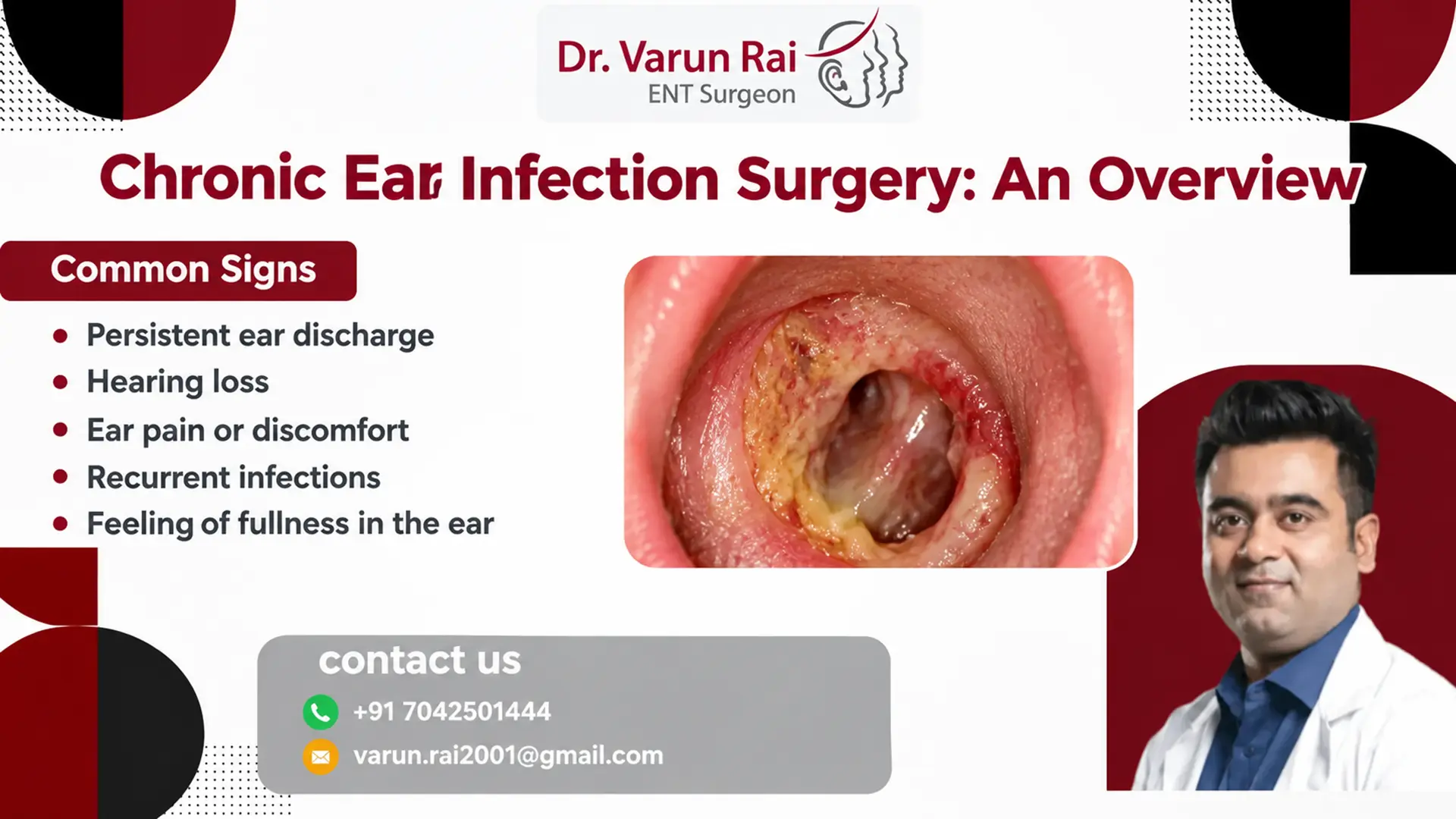
Chronic ear infections can cause repeated ear discharge, hearing difficulties, a feeling of blockage, and discomfort that may continue despite medicines or routine ear drops. When an infection becomes persistent or is associated with an eardrum perforation, damaged middle-ear structures, or conditions such as cholesteatoma, an ENT specialist may recommend surgery.
Chronic Ear Infection Surgery: An Overview explains when surgery may be considered, how doctors diagnose chronic ear disease, the common surgical procedures used, potential benefits, and what patients can expect during recovery. Treatment is individualized according to the cause, extent of disease, hearing status, and condition of the eardrum and middle ear.
For patients in New Delhi, Dr. Varun Rai, ENT Specialist, provides evaluation and treatment for a range of ear, nose, and throat conditions, including chronic ear problems, tympanoplasty, glue ear and myringotomy-grommet procedures, as well as other ENT surgical care.
Symptoms, Causes and Diagnosis of Chronic Ear Infections
Understanding the symptoms and underlying cause is an important first step before considering Chronic Ear Infection Surgery: An Overview. Not every persistent ear infection requires surgery. An ENT specialist first determines whether medicines, ear cleaning, observation, or a surgical procedure is appropriate.
Common Symptoms
Chronic ear infections may present with:
- Recurrent or persistent ear discharge
- Reduced or muffled hearing
- A feeling of fullness or blockage
- Recurrent ear infections
- Ear discomfort or pain, particularly during flare-ups
- Ringing or buzzing in the ear
- Occasionally, dizziness or balance problems
- A visible hole or perforation in the eardrum
Chronic suppurative otitis media is commonly associated with persistent drainage through a perforated eardrum and conductive hearing loss. Pain may not always be present.
Causes of Chronic Ear Infection
Several factors can contribute to persistent middle-ear disease, including:
- Previous acute middle-ear infections
- A persistent eardrum perforation
- Eustachian tube dysfunction or blockage
- Recurrent infections
- Previous ear trauma
- Water entering the middle ear through a perforated eardrum
- Damage to the tiny bones responsible for sound transmission
- Cholesteatoma
A cholesteatoma is a non-cancerous collection of skin-like material in the middle ear that can progressively damage nearby structures. When present, surgical removal is generally required.
How Is Chronic Ear Infection Diagnosed?
Diagnosis generally begins with a detailed medical history and examination of the ear. The ENT specialist may use an otoscope or other magnified examination to assess the ear canal and eardrum.
Depending on the findings, investigations may include:
- Ear examination: Checks for discharge, perforation, inflammation, or abnormal tissue.
- Hearing test: Audiometry evaluates the degree and type of hearing loss.
- Ear discharge testing: A sample may sometimes be examined to identify bacteria.
- CT scan: May be recommended when cholesteatoma, bone erosion, or other complications are suspected.
- MRI: May be considered in selected cases where additional assessment of soft tissue or complications is required.
These investigations help the ENT specialist determine whether medical treatment is sufficient or whether surgery should be considered.
Treatment and Surgical Options
The appropriate approach in Chronic Ear Infection Surgery: An Overview depends on the patient’s diagnosis. Surgery is not automatically required for every chronic ear infection.
Medical Treatment Before Surgery
Depending on the condition, treatment may include:
- Cleaning the ear and removing infected material
- Prescribed antibiotic ear drops
- Oral antibiotics for selected severe infections
- Management of underlying nasal or Eustachian tube problems
- Keeping a perforated ear dry as advised by the treating specialist
For chronic suppurative otitis media, topical antibiotic treatment and appropriate ear cleaning are commonly used, while surgery may be considered for persistent perforations, damaged ossicles, or cholesteatoma.
Tympanoplasty
Tympanoplasty is a surgical procedure used to repair a perforated eardrum. In some patients, the small bones of the middle ear can also be repaired during the same operation if they have been damaged.
The objective may include creating a stable, dry ear and, where possible, improving the mechanism of sound transmission. The suitability of tympanoplasty depends on the location and size of the perforation, middle-ear condition, hearing status, and other factors.
Mastoid Surgery
A mastoidectomy involves removing diseased tissue from the mastoid bone behind the ear. It may be necessary when disease extends into the mastoid or when a cholesteatoma requires surgical removal.
Cholesteatoma can erode bone and potentially affect hearing, balance, the facial nerve, or structures surrounding the ear. Therefore, timely ENT assessment is important when it is suspected.
Other ENT Procedures
Depending on the patient’s diagnosis, an ENT specialist may also recommend procedures such as:
- Myringotomy
- Grommet or ventilation tube placement
- Ossicular reconstruction
- Cholesteatoma surgery
- Combined tympanoplasty and mastoid surgery
The exact procedure should be selected after examination and appropriate hearing or imaging assessment.
For patients seeking Chronic Ear Infection Surgery: An Overview in New Delhi, Dr. Varun Rai provides ENT evaluation and surgical management for ear conditions, including tympanoplasty, glue ear treatment, myringotomy-grommet procedures, and other ENT care.
Benefits, Recovery, Comparison and FAQs
The potential benefits of Chronic Ear Infection Surgery: An Overview depend on the underlying condition and the type of surgery performed. Surgery is generally planned to address the source of disease rather than simply treat the symptoms.
Potential Benefits
Depending on the procedure, treatment may help:
- Control persistent ear infection or drainage
- Repair a perforated eardrum
- Remove cholesteatoma or diseased tissue
- Protect important ear structures from progressive disease
- Improve or stabilize hearing in selected patients
- Create a more stable and easier-to-manage ear
Hearing improvement is not guaranteed because the outcome depends on the condition of the middle and inner ear. The primary goal of some procedures, particularly cholesteatoma surgery, may be disease removal and creation of a safe ear.
Recovery After Ear Surgery
Recovery varies according to the procedure. Patients may experience temporary discomfort, fullness, reduced hearing while packing is present, mild dizziness, tinnitus, or altered taste. These symptoms can occur during normal healing and should be discussed with the treating surgeon if they are persistent or worsening.
Postoperative instructions may include:
- Keeping the operated ear dry
- Using prescribed ear drops or medicines
- Avoiding putting cotton buds or objects inside the ear
- Avoiding forceful nose blowing
- Avoiding heavy physical activity for a period recommended by the surgeon
- Attending scheduled follow-up appointments
- Completing postoperative hearing assessments when advised
After some mastoid procedures, follow-up may be required for an extended period to monitor the ear and check for recurrent disease.
Ear Infection Surgery vs Medical Treatment
| Medical Treatment | Surgical Treatment |
| Often used for active infection | Considered for selected chronic conditions |
| May include ear cleaning and prescribed ear drops | May repair the eardrum or remove diseased tissue |
| Appropriate for many flare-ups | May be required for persistent perforation or cholesteatoma |
| Does not repair every structural problem | Can address certain structural abnormalities |
| Treatment depends on the cause | Procedure depends on the extent of disease |
The choice between medical and surgical treatment should be made after an ENT examination rather than based only on symptoms.
Frequently Asked Questions
1. What is chronic ear infection?
A chronic ear infection is a persistent or recurrent condition affecting the ear, often associated with long-standing inflammation, eardrum perforation, discharge, or hearing loss.
2. Does every chronic ear infection require surgery?
No. Some patients can be managed with ear cleaning, prescribed ear drops, antibiotics when appropriate, and monitoring. Surgery may be recommended when there is persistent structural disease, a significant perforation, damaged middle-ear structures, or cholesteatoma.
3. What is tympanoplasty?
Tympanoplasty is surgery to repair a perforated eardrum. If the small middle-ear bones have been damaged, reconstruction may sometimes be performed during the same procedure.
4. What is a mastoidectomy?
A mastoidectomy is surgery to remove diseased tissue from the mastoid bone behind the ear. It may be performed when disease extends into the mastoid or when cholesteatoma needs to be removed.
5. Can chronic ear infection cause hearing loss?
Yes. Persistent middle-ear disease can interfere with sound transmission and may damage the ossicles, resulting in conductive hearing loss.
6. Can a perforated eardrum heal on its own?
Some eardrum perforations may heal spontaneously, while persistent perforations may require evaluation and, in selected cases, tympanoplasty. An ENT specialist can assess whether observation or repair is appropriate.
7. Is ear discharge always a sign of infection?
Persistent ear discharge can be associated with chronic middle-ear disease, but the exact cause needs to be established through examination. Persistent or foul-smelling discharge should be assessed by an ENT specialist.
8. How long does recovery take after ear surgery?
Recovery depends on the specific procedure and individual healing. Temporary discomfort, fullness, packing-related hearing reduction, or mild dizziness may occur. Follow-up is important to assess healing and hearing.
9. When should I see an ENT specialist?
Persistent ear discharge, recurrent infections, hearing loss, suspected eardrum perforation, dizziness, or worsening ear symptoms warrant an ENT assessment. Severe pain or swelling behind the ear can require urgent medical evaluation.
Conclusion
Chronic Ear Infection Surgery: An Overview highlights why persistent ear infections should not be ignored, particularly when they are associated with recurring discharge, hearing loss, eardrum perforation, or suspected cholesteatoma. Treatment can range from medical management and careful ear cleaning to procedures such as tympanoplasty or mastoid surgery, depending on the underlying problem.
For appropriate diagnosis and individualized treatment planning, consult an experienced ENT specialist rather than delaying evaluation of persistent ear symptoms.
Looking for expert ENT care in New Delhi? Book an appointment with Dr. Varun Rai, ENT Specialist, for evaluation and treatment of chronic ear infections, eardrum perforation, tympanoplasty, glue ear, myringotomy-grommet procedures, and other ear, nose, and throat conditions.

