


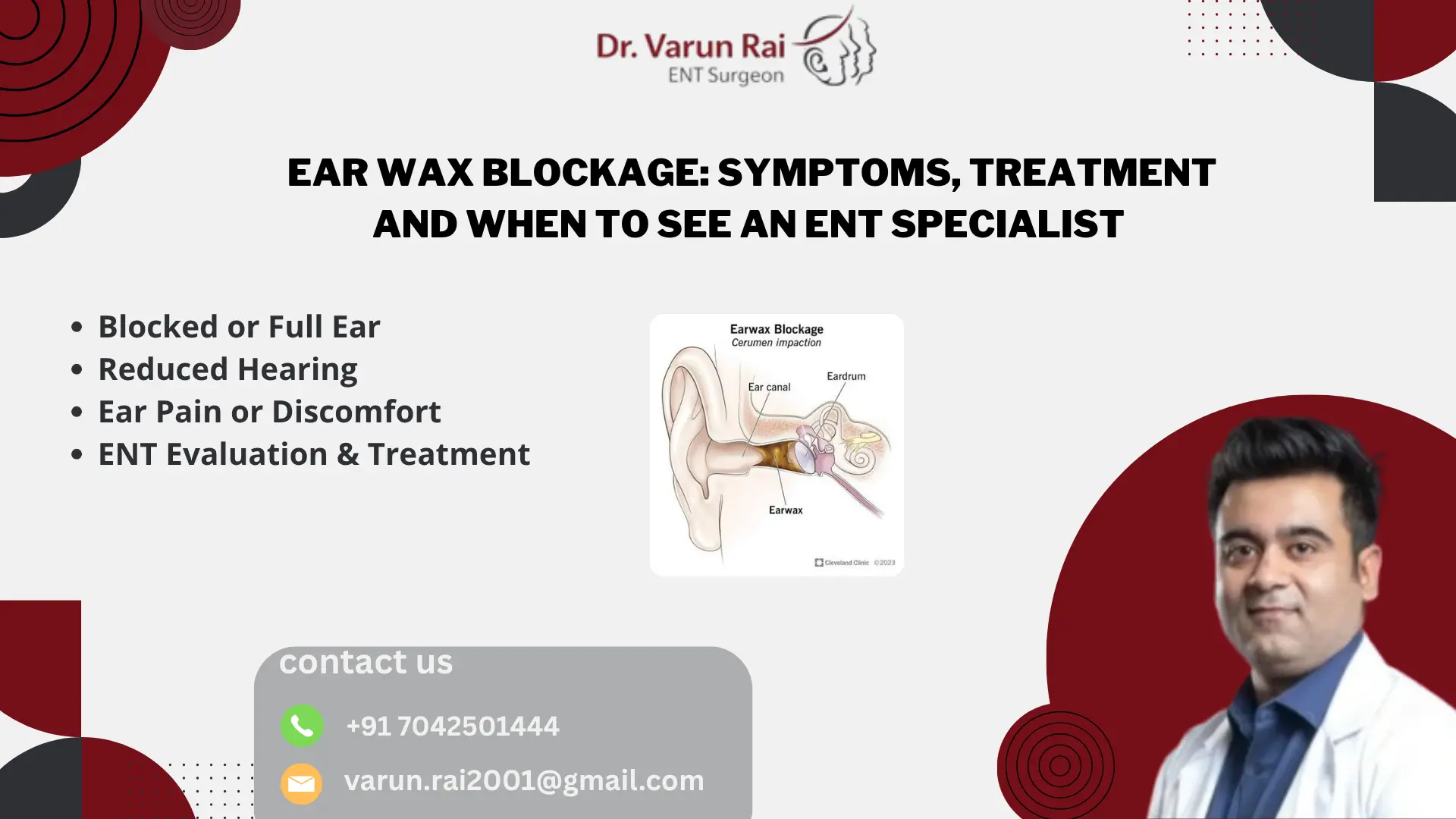
Earwax helps protect the ear canal by trapping dust, small particles, and other debris. In most people, it gradually moves out of the ear naturally. However, when too much wax accumulates or becomes tightly packed inside the ear canal, it can cause discomfort, a blocked sensation, and temporary hearing difficulties.
Earwax blockage occurs when wax builds up enough to cause symptoms or prevent an ear examination. Although it may seem like a minor problem, attempting to remove it with cotton buds, hairpins, or other objects can push the wax deeper and potentially injure the ear.
This guide explains the symptoms, causes, diagnosis, treatment options, and recovery associated with earwax blockage. It also covers the safe use of Ear Drops (Wax Softeners) and explains when professional ENT care is advisable.
If you are experiencing persistent ear blockage in Delhi, Dr. Varun Rai, ENT Surgeon at Sir Ganga Ram Hospital, can be consulted for an appropriate assessment. His stated special interests include sinus surgery and sialendoscopy; earwax treatment should be considered according to the patient’s individual needs and clinical findings.
Symptoms, Causes and Diagnosis of Earwax Blockage
Common symptoms of earwax blockage
Symptoms vary depending on how much wax has accumulated and whether it is obstructing the ear canal. Common signs include:
- A blocked or full feeling: The ear may feel plugged, as though water is trapped inside.
- Reduced hearing: Sound may seem muffled, particularly in the affected ear.
- Ear discomfort: A feeling of pressure or mild pain may occur.
- Ringing in the ear: Some people experience tinnitus, which is a ringing or buzzing sound.
- Itching: Wax accumulation or irritation of the ear canal may cause itching.
- Dizziness: Occasionally, earwax blockage is associated with dizziness or imbalance, although these symptoms can have other causes.
- Coughing: Stimulation of a nerve in the ear canal can sometimes trigger a cough.
In Earwax Blockage: Causes & Quick Relief Tips, recognising these warning signs helps readers understand when home care may be insufficient. Sudden hearing loss, severe pain, blood or discharge from the ear, or significant dizziness requires prompt medical assessment rather than assuming wax is responsible.
What causes earwax to become blocked?
Earwax, also known as cerumen, is produced naturally by glands in the ear canal. It usually moves outward as the skin renews itself and the jaw moves during talking and chewing. Blockage can develop when this natural process is disrupted.
Common contributing factors include:
- Using cotton buds: These can push wax deeper into the canal instead of removing it.
- Earplugs and hearing aids: Regular use may interfere with the natural movement of wax in some people.
- Narrow or curved ear canals: The shape of the canal can make wax clearance more difficult.
- Excessive wax production: Some individuals naturally produce more earwax than others.
- Age-related changes: Wax may become drier and harder with age.
- Incorrect cleaning methods: Hairpins, earbuds, and other objects can compact wax or injure the ear canal.
Understanding these causes is an important part of Earwax Blockage: Causes & Quick Relief Tips, because prevention often starts with avoiding unnecessary ear cleaning.
How is earwax blockage diagnosed?
An ENT specialist generally asks about symptoms, their duration, previous ear problems, and any history of ear surgery or eardrum damage. The doctor then examines the ear canal using an otoscope or another suitable instrument.
The examination helps determine whether wax is responsible for the symptoms or whether another condition may be present, such as an ear infection, fluid behind the eardrum, or another cause of hearing difficulty.
A hearing test may be recommended if hearing loss persists, is unexplained, or needs further evaluation. Not every patient requires additional testing; the decision depends on the clinical findings.
Treatment, Benefits, Recovery and Comparison
What are the treatment options for earwax blockage?
The appropriate treatment depends on the amount and consistency of wax, the patient’s symptoms, the condition of the eardrum, and any previous ear problems.
1. Ear Drops (Wax Softeners)
Ear Drops (Wax Softeners) can help soften hardened wax so it may leave the ear naturally or become easier for a clinician to remove. Depending on the product, these may contain oil-based ingredients, saline, or other wax-softening agents.
Use the product according to its instructions or a healthcare professional’s advice. Drops may not be suitable for everyone, particularly people with a suspected perforated eardrum, ear tubes, previous ear surgery, or possible ear infection. Ask a clinician before using them if any of these conditions apply.
2. Professional earwax removal
If the blockage causes symptoms or does not clear with appropriate softening treatment, a clinician may recommend one of the following:
- Manual removal: Special instruments are used to remove wax under direct visual guidance.
- Microsuction: A small suction device removes wax from the ear canal.
- Ear irrigation: Water or saline is used to flush wax out in selected patients when it is considered safe.
The best method depends on the patient’s examination. Irrigation may be unsuitable for some people, including those with certain eardrum problems, ear surgery history, or active ear infections. Professional assessment helps reduce avoidable risks.
In Earwax Blockage: Causes & Quick Relief Tips, the key point is that the safest treatment is not necessarily the fastest home remedy; it is the method appropriate for the individual ear.
Quick relief tips: What should you do at home?
If you suspect an earwax blockage, follow these precautions:
- Avoid inserting cotton buds or other objects into the ear canal.
- Do not use ear candles; they are not a safe or effective method of wax removal.
- Ask a pharmacist or clinician whether wax-softening drops are appropriate for you.
- Keep the ear free from unnecessary probing or scratching.
- Seek professional advice if symptoms persist or worsen.
Do not attempt to flush the ear at home if you have a history of eardrum perforation, ear tubes, ear surgery, or a possible infection unless a clinician has specifically advised you to do so.
Benefits of appropriate treatment
When wax is confirmed as the cause of symptoms, suitable treatment can offer several benefits:
- Relief from the blocked or full sensation.
- Improvement in hearing when the blockage was causing muffled sound.
- Reduced irritation associated with impacted wax.
- Better visibility of the eardrum during an examination.
- An opportunity to identify other ear conditions if symptoms do not resolve.
These benefits are not guaranteed in every case. If hearing problems or discomfort continue after the wax is removed, further assessment may be needed.
Earwax removal: Home care versus professional treatment
| Approach | Potential role | Important consideration |
| Wax-softening drops | May soften accumulated wax | Not suitable for every ear condition |
| Cotton buds | Not recommended for removing deep wax | Can push wax further inside |
| Professional manual removal | Removes wax under visual guidance | Requires suitable instruments and training |
| Microsuction | Removes wax using controlled suction | Suitability depends on the examination |
| Ear irrigation | Flushes wax out in selected patients | Not appropriate for everyone |
Recovery after earwax removal
Recovery is often straightforward when wax is removed successfully and no other ear condition is present. Many people notice improvement in blockage or hearing soon after treatment, although the result varies.
Follow the clinician’s aftercare advice and avoid inserting objects into the ear. Mild temporary sensitivity may occur, but significant pain, persistent dizziness, bleeding, discharge, or continued hearing loss should be assessed promptly.
The recovery period depends on the removal method and the condition of the ear canal. If symptoms continue, do not repeatedly use drops or attempt further removal without medical advice.
For people searching for Earwax Blockage: Causes & Quick Relief Tips in Delhi, an ENT assessment can help establish whether wax removal is necessary or another diagnosis should be considered.
FAQs, Conclusion and Appointment CTA
Frequently asked questions
1. What are the first signs of earwax blockage?
The most common signs are a plugged sensation, muffled hearing, itching, ear discomfort, or ringing. However, these symptoms can also occur with other ear conditions.
2. Can earwax blockage clear on its own?
Yes. Earwax often moves out of the ear naturally. A blockage that causes persistent symptoms may need wax-softening drops or professional removal, depending on the examination.
3. Are Ear Drops (Wax Softeners) safe?
They can be appropriate for many people when used as directed. However, people with a perforated eardrum, ear tubes, previous ear surgery, or a suspected infection should seek medical advice before using them.
4. Can cotton buds remove earwax safely?
Cotton buds should not be inserted into the ear canal. They can push wax deeper, irritate the skin, and potentially injure the ear.
5. Is professional earwax removal painful?
Many patients tolerate removal well, although discomfort can occur, particularly when wax is hard or the ear canal is sensitive. Tell the clinician if you experience pain during the procedure.
6. How long does it take to recover after earwax removal?
Some people experience relief immediately, while others may need additional assessment or follow-up. Recovery depends on the ear’s condition and the treatment used.
7. When should I see an ENT specialist for earwax blockage?
Arrange an assessment if blockage, discomfort, or reduced hearing persists. Seek urgent medical care for sudden hearing loss, severe pain, bleeding, discharge, or significant dizziness.
8. Where can I consult an ENT specialist for earwax blockage in Delhi?
You can contact Sir Ganga Ram Hospital in Old Rajinder Nagar, New Delhi, to enquire about an ENT consultation. The doctor will assess your symptoms and recommend an appropriate course of care.
Conclusion
Earwax is a natural protective substance, but excessive accumulation can cause blockage, discomfort, and temporary hearing difficulties. Avoiding cotton buds, using wax-softening drops only when suitable, and seeking professional care when needed can help reduce the risk of injury.
Earwax Blockage: Causes & Quick Relief Tips highlights an important principle: treatment should address the actual cause of symptoms rather than rely on self-diagnosis. If the blockage persists or you develop concerning symptoms, an ENT assessment is the sensible next step.
Book an ENT consultation in Delhi
If you are experiencing ear blockage, muffled hearing, or persistent ear discomfort, arrange an appointment for an appropriate assessment.
Dr. Varun Rai — ENT Surgeon
Special interests: sinus surgery and sialendoscopy
- Location: Room No. F-77, Sir Ganga Ram Hospital, Old Rajinder Nagar, Rajinder Nagar, New Delhi, Delhi – 110060.
- Appointment number: +91 70425 01444.
Book an appointment to discuss your symptoms and determine whether professional earwax removal is appropriate. The recommended treatment and recovery depend on your individual condition and examination findings.

