


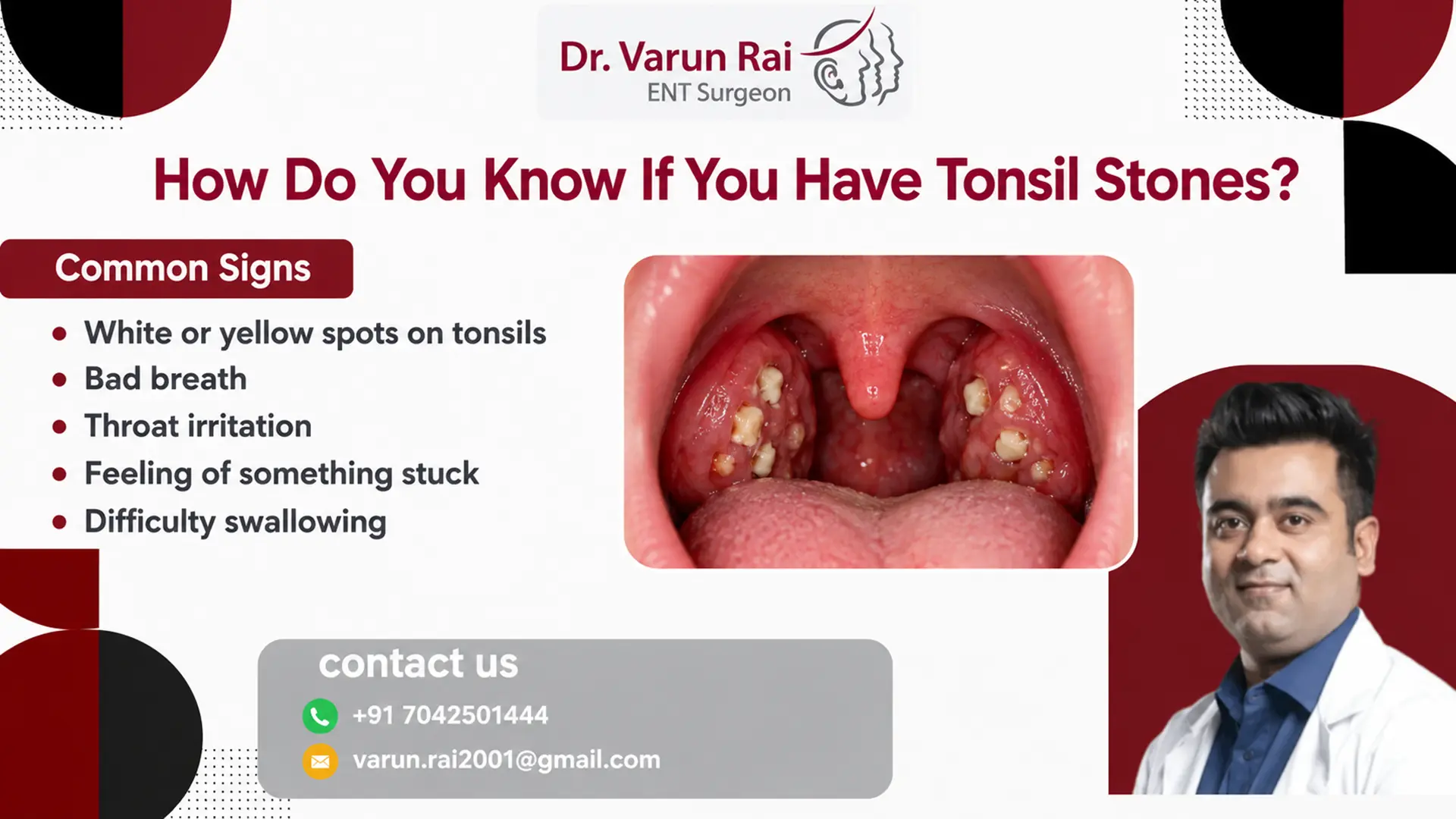
How Do You Know If You Have Tonsil Stones? Tonsil stones, medically known as tonsilloliths, are small, hardened deposits that develop in the crypts or small pockets of the tonsils. They are usually made up of trapped food particles, mucus, bacteria and cellular debris that gradually accumulate and harden. Although tonsil stones are generally not dangerous, they can cause unpleasant symptoms such as bad breath, throat irritation, a feeling that something is stuck in the throat, or difficulty swallowing.
Knowing the typical signs of tonsil stones can help you understand when an ENT evaluation may be appropriate. Some tonsil stones are visible as small white or yellow spots on the tonsils, while others are hidden deeper inside the tonsillar crypts and may only be detected during an examination.
For people searching How Do You Know If You Have Tonsil Stones?, it is important to understand that similar symptoms can occur with tonsillitis, throat infections, postnasal drip and other ENT conditions. A proper diagnosis can therefore help identify the underlying cause and determine whether simple home care or professional treatment is needed.
Symptoms, Causes and Risk Factors of Tonsil Stones
Common symptoms of tonsil stones
The symptoms of How Do You Know If You Have Tonsil Stones? may vary depending on the size and location of the stones. Some people have tonsil stones without any symptoms, while others experience persistent throat or mouth-related discomfort.
Common symptoms include:
- Bad breath: One of the most frequently reported symptoms is persistent unpleasant breath caused by bacteria and trapped debris.
- White or yellow spots: Tonsil stones may appear as tiny white, cream-coloured or yellowish lumps in the tonsil crypts.
- Something stuck in the throat: Some people describe a sensation of having a foreign body or lump in the throat.
- Sore throat or irritation: Larger stones can irritate surrounding tonsil tissue.
- Difficulty swallowing: Larger or strategically positioned stones may make swallowing uncomfortable.
- Ear discomfort: Tonsil-related irritation can sometimes cause discomfort in the ear.
- Coughing: A persistent cough or throat clearing may occur in some individuals.
- Unpleasant taste: Dislodged tonsil stones can sometimes produce an unpleasant taste in the mouth.
A white spot on the tonsil does not automatically mean that you have a tonsil stone. Tonsillitis, bacterial infections and other conditions can also cause white patches, which is why persistent or concerning symptoms should be assessed by an ENT specialist.
What causes tonsil stones?
Tonsils contain natural folds and crypts. Food particles, mucus, bacteria and dead cells can become trapped within these areas. Over time, the material may become compacted and calcified, forming a tonsil stone.
Factors that may contribute to tonsil stone formation include:
- Deep or prominent tonsillar crypts
- Recurrent tonsil inflammation
- Poor oral hygiene
- Chronic mucus or postnasal drainage
- Accumulation of food debris
- Recurrent throat infections
Not everyone with tonsillar crypts develops tonsil stones. Their formation can differ significantly from one person to another.
Who may be more likely to develop tonsil stones?
People with larger tonsils or deeper tonsillar crypts may have more areas where debris can become trapped. A history of recurrent tonsillitis may also contribute to changes in the tonsillar surface.
Maintaining good oral hygiene, brushing the tongue and staying adequately hydrated may help reduce the accumulation of debris, although these measures cannot guarantee that tonsil stones will not develop.
Diagnosis and Tonsil Stones Treatment Without Surgery
How are tonsil stones diagnosed?
If you are wondering How Do You Know If You Have Tonsil Stones?, an ENT examination is often the most straightforward way to determine whether the symptoms are caused by tonsil stones.
An ENT specialist may examine the mouth, throat and tonsils using light and appropriate examination instruments. Visible stones can often be identified during a routine examination.
If a stone is hidden deep within a tonsillar crypt, additional assessment may sometimes be necessary to distinguish it from other causes of throat symptoms. The doctor may also consider your history of bad breath, recurrent throat discomfort, swallowing problems or repeated tonsil infections.
A diagnosis is particularly important when white patches or swelling are accompanied by fever, significant pain, enlarged lymph nodes or other signs of infection.
Tonsil Stones Treatment Without Surgery
Many tonsil stones are small and do not require an invasive procedure. Tonsil Stones Treatment Without Surgery may be appropriate when stones are small, symptoms are mild and there are no complications.
Depending on the individual situation, conservative care may include:
- Maintaining good oral hygiene
- Brushing the teeth and tongue regularly
- Gargling with warm salt water
- Drinking adequate fluids
- Managing postnasal mucus when present
- Following an ENT specialist’s recommendations for recurrent stones
Some small stones may naturally dislodge during coughing, swallowing or gargling.
It is important to avoid aggressively digging into the tonsils with sharp objects or other unsuitable instruments. This can cause bleeding, tissue injury or infection.
When is professional treatment considered?
Professional treatment may be considered when tonsil stones repeatedly return, cause persistent bad breath, create significant discomfort or cannot be safely removed at home.
An ENT specialist can assess the size, location and recurrence of the stones and discuss appropriate management. Treatment should be individualized rather than based solely on the presence of a white spot on the tonsil.
For patients researching How Do You Know If You Have Tonsil Stones?, understanding the difference between a harmless small tonsil stone and a condition requiring medical attention is an important part of effective ENT care.
Dr. Varun Rai and ENT services
Dr. Varun Rai, ENT Specialist in New Delhi, provides evaluation and treatment for a range of ear, nose and throat conditions. His ENT services include assessment and management of throat problems, sinus conditions and other common ENT disorders.
His areas of treatment include:
- Tonsil and throat problems
- Tonsil-related conditions
- Sinus problems and sinus surgery
- Sialendoscopy for salivary gland disorders
- Glue ear and middle-ear conditions
- Myringotomy and grommet procedures
- Tympanoplasty
- Stapes-related ear surgery
- Other ear, nose and throat conditions
If you have recurring throat discomfort, bad breath, visible tonsil spots or a persistent sensation of something being stuck in your throat, an ENT consultation can help determine whether tonsil stones are responsible.
Benefits, Recovery and Comparison With Other Tonsil Conditions
Benefits of appropriate treatment
When tonsil stones are correctly identified and managed, patients may experience improvement in symptoms such as:
- Persistent bad breath
- Unpleasant taste
- Throat irritation
- Foreign-body sensation
- Recurrent discomfort associated with larger stones
- Difficulty swallowing caused by a larger stone
The main benefit of treatment is addressing the symptoms and reducing the accumulation of tonsil debris. The appropriate approach depends on how frequently the stones occur and how significantly they affect the individual.
Recovery after tonsil stone treatment
Recovery depends on the treatment used. Simple conservative measures generally require little or no recovery time. If an ENT specialist performs a procedure to remove a stone, aftercare instructions will depend on the technique used.
Patients should follow the doctor’s instructions regarding oral hygiene, food and drink, medications and follow-up.
If tonsil surgery is recommended for a separate medical reason, recovery is considerably different from simple tonsil-stone removal and should be discussed with the ENT specialist beforehand.
Tonsil stones vs tonsillitis
| Feature | Tonsil Stones | Tonsillitis |
| Main cause | Trapped debris that hardens in tonsil crypts | Inflammation/infection of the tonsils |
| Appearance | Small white/yellow deposits | Red, swollen tonsils with possible white patches |
| Bad breath | Common | May occur |
| Fever | Usually absent | May occur |
| Throat pain | Often mild or absent | Can be significant |
| Treatment | Often conservative or stone removal | Depends on the cause and severity |
These conditions can sometimes look similar. A medical examination is useful when symptoms are persistent, severe or difficult to distinguish.
When should you see an ENT specialist?
You should consider an ENT evaluation if you have recurring tonsil stones, persistent bad breath despite good oral hygiene, repeated throat discomfort, difficulty swallowing, recurrent tonsil infections or a persistent lump-like sensation.
Seek prompt medical care for severe difficulty breathing or swallowing, significant swelling, severe worsening throat pain, or other symptoms that suggest a potentially serious infection.
FAQs About Tonsil Stones
1. How Do You Know If You Have Tonsil Stones?
Common clues include small white or yellow deposits on the tonsils, persistent bad breath, an unpleasant taste, throat irritation or a sensation that something is stuck in the throat. An ENT examination can confirm the diagnosis.
2. Are tonsil stones dangerous?
Most tonsil stones are not dangerous and may cause only minor symptoms. However, persistent or severe throat symptoms should be evaluated because other conditions can produce similar signs.
3. Can tonsil stones go away on their own?
Yes. Small tonsil stones may naturally dislodge through swallowing, coughing or normal movement of the tonsils. Some may remain in the tonsillar crypts and require professional removal.
4. Can tonsil stones cause bad breath?
Yes. Tonsil stones can contribute to bad breath because they may contain bacteria and trapped organic material. However, dental problems, gum disease, dry mouth and other conditions can also cause bad breath.
5. What is Tonsil Stones Treatment Without Surgery?
For suitable patients, conservative management may include good oral hygiene, tongue cleaning, adequate hydration and salt-water gargling. An ENT specialist can recommend additional treatment when stones repeatedly recur or cause significant symptoms.
6. Can tonsil stones cause throat pain?
They can cause throat irritation or discomfort, particularly when a larger stone is present. Significant throat pain, fever or marked swelling may indicate another condition such as tonsillitis and should be assessed.
7. Can I remove tonsil stones myself?
Small stones may sometimes come out naturally with coughing or gargling. However, aggressively scraping or digging into the tonsils is not recommended because it can cause injury and bleeding.
8. Can tonsil stones come back after treatment?
Yes. Treatment of an existing stone does not necessarily eliminate the underlying tonsillar crypts where debris can accumulate. Some people therefore experience recurrent stones.
9. Should I see an ENT doctor for recurring tonsil stones?
Yes. If tonsil stones repeatedly return, cause persistent bad breath or discomfort, or are difficult to remove safely, an ENT specialist can examine the tonsils and discuss suitable management options.
10. Can white spots on the tonsils always be tonsil stones?
No. White or yellow patches can also occur with tonsillitis and other throat conditions. An ENT examination can help determine the actual cause.
Conclusion
How Do You Know If You Have Tonsil Stones? Look for common signs such as persistent bad breath, small white or yellow deposits in the tonsils, throat irritation, an unpleasant taste or the sensation of something being stuck in the throat. Small, uncomplicated tonsil stones can often be managed conservatively, while recurrent or troublesome stones may require professional ENT assessment.
Tonsil Stones Treatment Without Surgery may be suitable for many patients, but the right approach depends on the size, location, frequency of recurrence and symptoms. Avoid using sharp objects or forceful methods to remove stones because the tonsils can bleed or become injured.
If you are experiencing recurring tonsil stones, persistent throat discomfort, bad breath or difficulty swallowing, Book an ENT consultation with Dr. Varun Rai in New Delhi for an appropriate examination and personalized treatment plan.
Book an appointment with Dr. Varun Rai ENT to get your throat and tonsils evaluated and discuss suitable treatment options for tonsil stones and other ENT conditions.

